Every clinic owner knows the feeling. A 2 PM slot sits empty. The client booked a week ago, confirmed yesterday, and then… nothing. No call, no text, just an unpaid 45-minute hole in your schedule. For a therapist charging $120 per session, that’s $120 gone. For a dental practice, it’s lost hygiene revenue plus idle chair time. Across service industries, no-show rates average 15-30% — and for some niches like salons or insurance appointments, it can hit 40%.
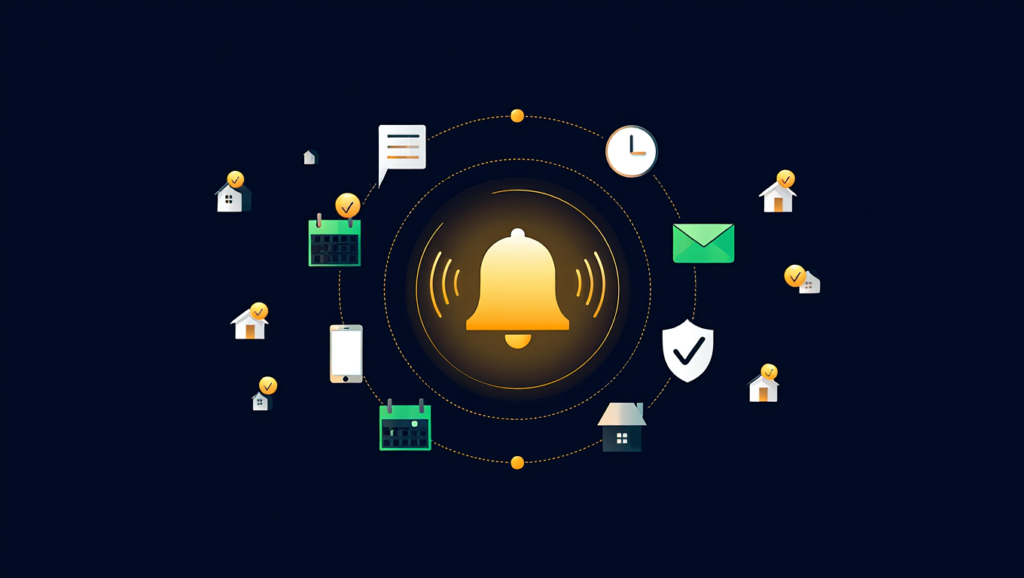
This article walks you through exactly how to reduce no-shows with automated appointment reminders. You’ll get a step-by-step system, specific timing rules that work, message templates you can copy, and a comparison of the best software tools for 2026. By the end, you’ll know how to cut missed appointments by at least a third — without adding manual work to your front desk.
⚡ QUICK ANSWER
To reduce no-shows with automated appointment reminders, you need software that sends SMS, email, and push notifications on a scheduled timeline: 48 hours, 24 hours, and 2 hours before the appointment. Add a double-confirmation step requiring clients to reply “YES” or click a link. Businesses using this three-touch automated system typically see no-show rates drop from 20% to under 10% within 60 days.
What You’ll Need Before You Start
Before building your reminder system, gather these three things:
- An appointment scheduling platform that supports automated reminders (not just manual calendar invites). Most tools listed below include this natively.
- Client contact preferences – Decide if you’ll use SMS, email, or both. SMS has 98% open rates within three minutes, making it far more effective than email alone. However, some clients prefer email for less intrusive communication.
- A clear cancellation policy – Automated reminders work best when paired with a published policy (e.g., “cancellations within 24 hours incur 50% fee”). Reminders remind clients of this policy naturally.
If you already use a calendar like Google Calendar, you’ll need to upgrade to a dedicated booking system. Standard calendar invites don’t support two-way SMS or automated follow-ups.
Step-by-Step: How to Reduce No-Shows with Automated Appointment Reminders
Step 1: Choose Your Reminder Channels and Software
The first decision: what channels will your reminders use? Most effective systems combine SMS and email, with SMS as the primary driver.
SMS (text messaging) – Highest engagement. Ideal for 24-hour and 2-hour reminders. Keep messages under 160 characters for single-segment delivery. Cost ranges from $0.0075 to $0.05 per message depending on volume.
Email – Better for detailed information (address, preparation instructions, intake forms). Open rates average 20-30% for service businesses, so don’t rely on email alone.
Push notifications – If your clients use a mobile app (e.g., fitness studios with branded apps), push notifications add a third layer. But for most small businesses, SMS + email is sufficient.
Now select software that supports automated sequences. The tools we’ll cover later (Calendly, Acuity, SimplePractice, GoHighLevel, Setmore) all offer multi-channel reminders. Avoid basic calendar apps that only send a single manual reminder.
Step 2: Set Your Reminder Timing Rules
Timing determines effectiveness. Too many reminders annoy clients. Too few get ignored. The industry standard three-touch sequence:
First touch: 48 hours before appointment – Send an email (not SMS). Include the date, time, location or link, and a polite request to confirm. Example: “Your appointment with Dr. Chen is Friday at 2 PM. Click here to confirm or reschedule.”
Second touch: 24 hours before appointment – Send an SMS. This is your most important reminder. Keep it short: “Reminder: Your appointment at [Business Name] is tomorrow at 2 PM. Reply YES to confirm or call [number] to reschedule.”
Third touch: 2 hours before appointment – Send a final SMS. For in-person appointments, include a “on your way?” option. For virtual appointments, include the meeting link again. Example: “Your virtual session starts in 2 hours. Join link: [URL]. Reply HERE if you need directions.”
Some businesses add a fourth touch (10 minutes before for virtual appointments), but three is sufficient for most service models.
Special cases: For high-value appointments (surgery consults, $500+ services), add a phone call confirmation 72 hours out. For recurring appointments (weekly therapy), reduce to two touches after the first month.
Step 3: Craft Effective Message Templates That Get Responses
Your reminder language matters as much as timing. Use these proven templates, customized for your business.
48-hour email template:
text
Subject: [Business Name] – Confirm your appointment for [Date]

Hi [Client Name],

This is a courtesy reminder for your upcoming appointment:

📅 Date: [Date]
⏰ Time: [Time]
📍 Location: [Address or virtual link]

Please confirm this appointment by replying to this email or clicking:
[Confirm Appointment Button]

If you need to reschedule or cancel, please let us know at least 24 hours in advance to avoid a cancellation fee.

Thank you,
[Business Name]
24-hour SMS template:
text
[Business Name] reminder: Your [service type] with [staff name] is tomorrow at [time]. Reply YES to confirm or call [number] to reschedule. Cancel within 24hrs may incur fee.
2-hour SMS template:
text
[Business Name]: Your appointment starts in 2 hours at [time]. Reply ONMYWAY if you're heading over. Need to reschedule? Call [number] now.
Key elements in every message: business name, client name, date, time, clear action (confirm/reschedule), and policy reminder (fee for late cancel). Never send a reminder without a call to action — a passive “we look forward to seeing you” doesn’t reduce no-shows.
Step 4: Configure Double Confirmation and Waitlist Automation
A single confirmation isn’t enough. Build a double-confirmation system:
- Client confirms when booking (automatic in most scheduling tools).
- Client re-confirms via reply to your 24-hour SMS.
If a client does not reply “YES” to the 24-hour reminder, your system should automatically:
- Send a follow-up SMS 12 hours before: “We noticed you haven’t confirmed your [time] appointment. Please reply YES now or release the slot using this link [link].”
- Mark the appointment as “unconfirmed” in your calendar.
- Offer the slot to waitlisted clients 6 hours before if still unconfirmed.
Waitlist automation is underused but powerful. When a regular client cancels with less than 24 hours notice, automatically text your waitlist: “Opening at [time] today. Reply SLOT to claim.” This fills empty chairs on short notice.
Step 5: Test, Measure, and Optimize Your Reminder Performance
After setting up reminders, track these three metrics for 30 days:
No-show rate = (missed appointments / total appointments) × 100. Calculate weekly. You should see a drop from baseline within two weeks.
Confirmation rate = (clients who reply to 24-hour SMS / total SMS sent). Target above 70%. Below 60% means your template or timing needs adjustment.
Short-notice cancellation rate = cancellations within 24 hours. Automated reminders often shift no-shows into short-notice cancellations — that’s still a win because you can rebook the slot.
Optimization levers: If no-shows persist, increase the cancellation fee disclosure. If confirmation rates are low, shorten your SMS (under 140 characters). If clients complain about too many messages, remove the 48-hour email and keep only SMS at 24 and 2 hours.
Best Billing Software for Independent Optometrists 2026 (Top 5 Picks)
Common Mistakes to Avoid
Mistake 1: Sending only one reminder – A single 24-hour notice is better than nothing, but you lose the final 2-hour nudge that catches clients who forgot. Three-touch sequences consistently outperform one or two touches.
Mistake 2: Using email only – Email open rates for appointment reminders rarely exceed 40%. SMS open rates exceed 95% within 5 minutes. If you’re not using SMS, you’re leaving 30-50% of potential confirms on the table. Even a basic text plan ($20/month for 500 messages) pays for itself after preventing two missed appointments.
Mistake 3: No confirmation requirement – Sending a reminder without asking for a reply tells you nothing. A client who reads and ignores is still likely to no-show. Requiring “YES” or a link click confirms intent and lets you release unconfirmed slots to waitlisted clients.
Mistake 4: Generic, brandless messages – “Reminder: you have an appointment” could be from any business. Include your business name and the staff member’s name. Personalization increases confirmation rates by 15-20%.
Mistake 5: Ignoring time zones – If you serve clients across time zones, your software must adjust reminder times to the client’s local zone. Sending a “2 hours before” SMS at 8 AM client time when they’re in a meeting is useless. Most modern scheduling tools handle this automatically — check your settings.
The Best Appointment Reminder Tools Compared
| Tool | SMS | Automation | Confirm | Waitlist | Price | Best For | |
|---|---|---|---|---|---|---|---|
| Calendly | Add-on | ✅ | ✅ | Limited | ❌ | $12/mo | Freelancers |
| Acuity Scheduling | Twilio | ✅ | ✅ | ✅ | ✅ | $16/mo | Salons/fitness |
| SimplePractice | ✅ | ✅ | ✅ | ✅ | ✅ | $39/mo | Clinics |
| GoHighLevel | Unlimited | ✅ | ✅ | ✅ | ✅ | $97/mo | Agencies |
| Setmore | Credits | ✅ | ✅ | ❌ | ❌ | $5/mo | Budget solo |
Calendly
Acuity Scheduling
SimplePractice
GoHighLevel
Setmore
Best Overall: GoHighLevel – powerful automation and unlimited messaging for high-volume bookings.
Best Budget: Setmore – extremely affordable for solo professionals.
Best for Growth: Acuity Scheduling – strong automation + waitlist features for scaling businesses.
Best for Healthcare: SimplePractice – built for clinics with full compliance and patient workflows.
Note on SMS costs: Acuity and Setmore require separate SMS credits or Twilio integration. SimplePractice and GoHighLevel include SMS in their monthly fee. Calendly’s SMS add-on costs $10/month + usage.
Tools That Make This Easier
Now let’s look at each tool in detail — these are the platforms that automate the entire reminder sequence we just walked through.
Calendly is the simplest entry point. You create one booking link, clients pick a time, and Calendly automatically sends email reminders. SMS requires their $10/month add-on (SMS by TextUs). The free tier includes manual reminders but no automation. Calendly’s strength is ease of use — you can be live in 10 minutes. The limitation: double confirmation and waitlists aren’t native. Best for solo professionals booking 10-20 appointments weekly. [AFFILIATE LINK: Calendly]
Acuity Scheduling (owned by Squarespace) offers more reminder control. You can build custom SMS and email sequences with timing rules (e.g., “send 24 hours before, then 2 hours before”). Acuity supports double confirmation via its “Require client to confirm” setting — unconfirmed appointments auto-cancel 12 hours before. Waitlists are native. Pricing starts at $16/month for one calendar. SMS requires Twilio account (pay as you go, ~$0.0075/text). Best for salons, spas, and fitness studios with 2-5 staff.
SimplePractice is built for healthcare — therapists, speech pathologists, and nutritionists. It includes HIPAA-compliant messaging, which matters if you send appointment details that could imply a health condition. Reminders are fully automated: you set the timing (e.g., 72h, 24h, 2h) and channels (SMS, email, or both). Clients confirm via reply, and unconfirmed appointments trigger a notification to you. At $39/month, it’s pricier but includes intake forms, billing, and telehealth. Best for solo or small group health practices.
GoHighLevel is the most powerful (and complex) option. Originally built for marketing agencies, it now serves businesses booking 100+ appointments monthly. Unlimited SMS is included in the $97/month plan. You can build multi-step reminder campaigns with conditional logic: “If client confirms, stop reminders. If client doesn’t confirm, send a cancellation threat at 6 hours.” GoHighLevel also includes a calendar, pipeline management, and automated voicemail drops. Overkill for a solo therapist but excellent for insurance agencies, med spas, and high-volume clinics.
Setmore is the budget pick at $5/month. You get email reminders and a calendar. SMS reminders are credit-based ($10 for 100 texts). The interface is dated, and there’s no double confirmation or waitlist. However, if your only goal is to move from manual texts to basic automation, Setmore works. Best for very small operations (coffee shops with event rooms, individual tutors) booking under 50 appointments monthly.
Section 179 / Tax Hook for Business Owners
If you’re a U.S.-based business owner, subscription fees for appointment reminder software are fully tax-deductible as an ordinary business expense under Section 179 (or simply as a general operating cost). That means a $40/month SimplePractice plan costs you roughly $28 after tax savings at a 30% effective tax rate. Keep your receipts — and don’t let tax savings be the main driver, but it’s a real perk.
Frequently Asked Questions
How much can automated appointment reminders reduce no-shows?
Studies across healthcare and service industries show automated SMS and email reminders reduce no-show rates by 30-50% compared to no reminders. A three-touch sequence (48h email, 24h SMS, 2h SMS) typically drops rates from 20-25% to 8-12% within 60 days. The exact reduction depends on your client demographic and cancellation policy.
What’s the best free tool for automated appointment reminders?
No completely free tool offers automated SMS reminders. Setmore has a free tier (email reminders only, one calendar). You can use Google Calendar’s built-in email notifications, but those aren’t automated confirmations — they’re passive. For true automation with SMS, budget at least $12-16 per month. The cost is almost always offset by preventing 2-3 missed appointments.
Can I send automated appointment reminders from my regular phone number?
Most appointment reminder software requires a dedicated business number or integration with SMS providers like Twilio. You typically cannot use your personal cell phone number because automated bulk SMS requires registration with carriers (10DLC compliance). The exception: some CRMs like GoHighLevel can mask messages to appear from your business number. Plan on getting a separate number — it’s a $5-10 monthly cost.
How far in advance should I send appointment reminders?
Send the first reminder 48 hours before (email), the second 24 hours before (SMS), and the third 2 hours before (SMS). For very high-value appointments (e.g., $500+ consultations), add a phone call 72 hours out. For recurring appointments with established clients, two touches (24h and 2h) are sufficient. Never send a reminder more than 7 days in advance — clients will ignore or forget.
Do automated reminders work for same-day bookings?
Yes, but you need a different sequence. For appointments booked on the same day, send an immediate confirmation SMS with the time, then a second SMS 30 minutes before. Don’t use the standard 24h and 2h sequence for same-day — the client just booked, so the 24h reminder would arrive after the appointment. Most scheduling software lets you set rule exceptions for bookings made within 24 hours.
Is it legal to charge no-show fees with automated reminders?
Yes, as long as you disclose the fee clearly in your booking terms and in your reminder messages. The 24-hour SMS should state: “Cancel within 24hrs may incur fee.” Most U.S. states allow reasonable no-show fees (e.g., 50-100% of service cost) for professional services. Healthcare has additional rules — Medicare and Medicaid prohibit balance billing for missed appointments, but private practice therapists can charge no-show fees. Read: state-by-state no-show fee regulations → National Law Review
Conclusion
Reducing no-shows isn’t complicated, but it requires moving from manual check-ins to a timed, multi-channel automated system. The three-touch sequence (48h email, 24h SMS, 2h SMS) with double confirmation works across healthcare, salons, insurance, coaching, and any other appointment-based business. Pick software that supports SMS — email alone won’t move the needle.
Start with one channel (SMS) and two touches (24h and 2h). Measure your no-show rate for two weeks. Then add the 48h email and double confirmation. Most businesses see a 30% drop in missed appointments within 30 days.
If you’re ready to implement, Calendly is the easiest starting point for solos, Acuity balances features and price for small teams, and SimplePractice is the right choice for HIPAA-covered health practices. All offer free trials — pick one and set up your first automated reminder today. Calendly – Start free trial]